



Interview by: Michael Harriot
Text by: Chris Erik Thomas
Photographed by: Julian Song
Styled by: Matthew Henson
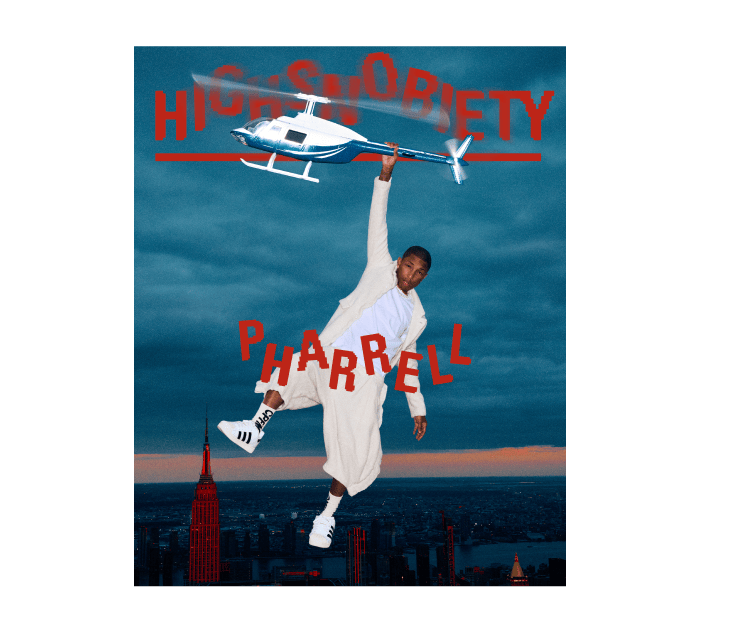
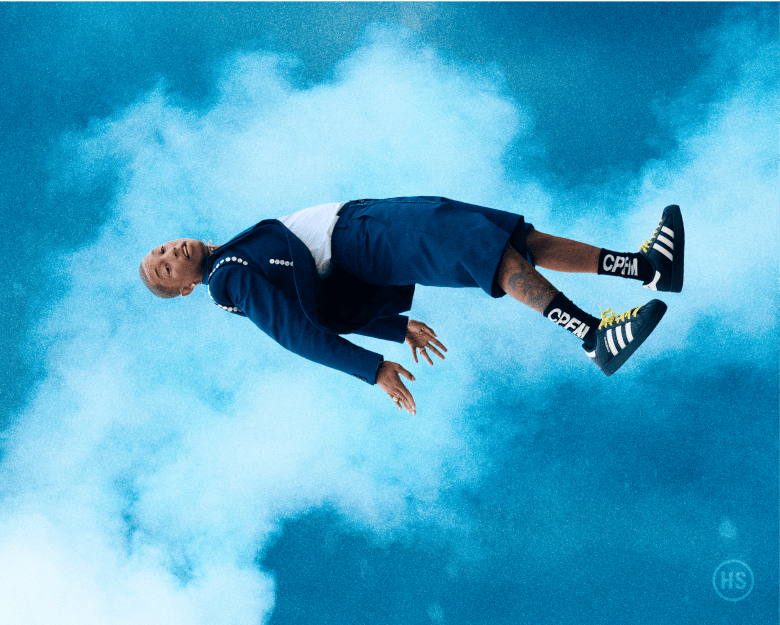
Pharrell Williams is like water. No, not because he has a suspiciously hydrated, eternally youthful glow. Rather because of his preternatural ability to pour himself into whatever opportunity comes his way. Simply stating that Williams is a man of many hats (including 2014’s cartoonishly oversized Vivienne Westwood buffalo hat) is an understatement. From the moment the Grammy-winning artist emerged on the music scene in 1992, writing a verse for Wreckx-n-Effect’s hit single “Rump Shaker,” his trajectory has been celestial.

He’s worked as one half of a production power duo (The Neptunes), fronted a band (N.E.R.D.), and founded a record label (Star Trak Entertainment) with former creative partner Chad Hugo. He has partnered with Japanese fashion legend Nigo on two streetwear brands (Billionaire Boys Club and Ice Cream), launched a skincare brand (Humanrace), and, most recently, made waves in the fashion industry as Louis Vuitton’s men’s creative director. His falsetto, smooth as a soft leather LV bag, has flooded the radio waves for decades. He’s lent his magic touch to enough 2000s-era earworms to send millennials of a certain age into a frenzy; thank him later for “I’m a Slave 4 U,” “Hot in Herre,” and Snoop Dogg’s career-altering “Drop It Like It’s Hot.”
It’s dizzying to comprehend just how much the 51-year-old maverick has achieved, but for Williams, his journey comes down to four simple words: “Curiosity is the key.” As he explains to Highsnobiety, bright studio lights glinting off his gold grillz, when we sat down with him earlier this month: “As long as you're curious, then you have something [to do]. You have options [and] inspiration and direction, but it's all based on how curious you want to be. How curious you allow yourself to be.”
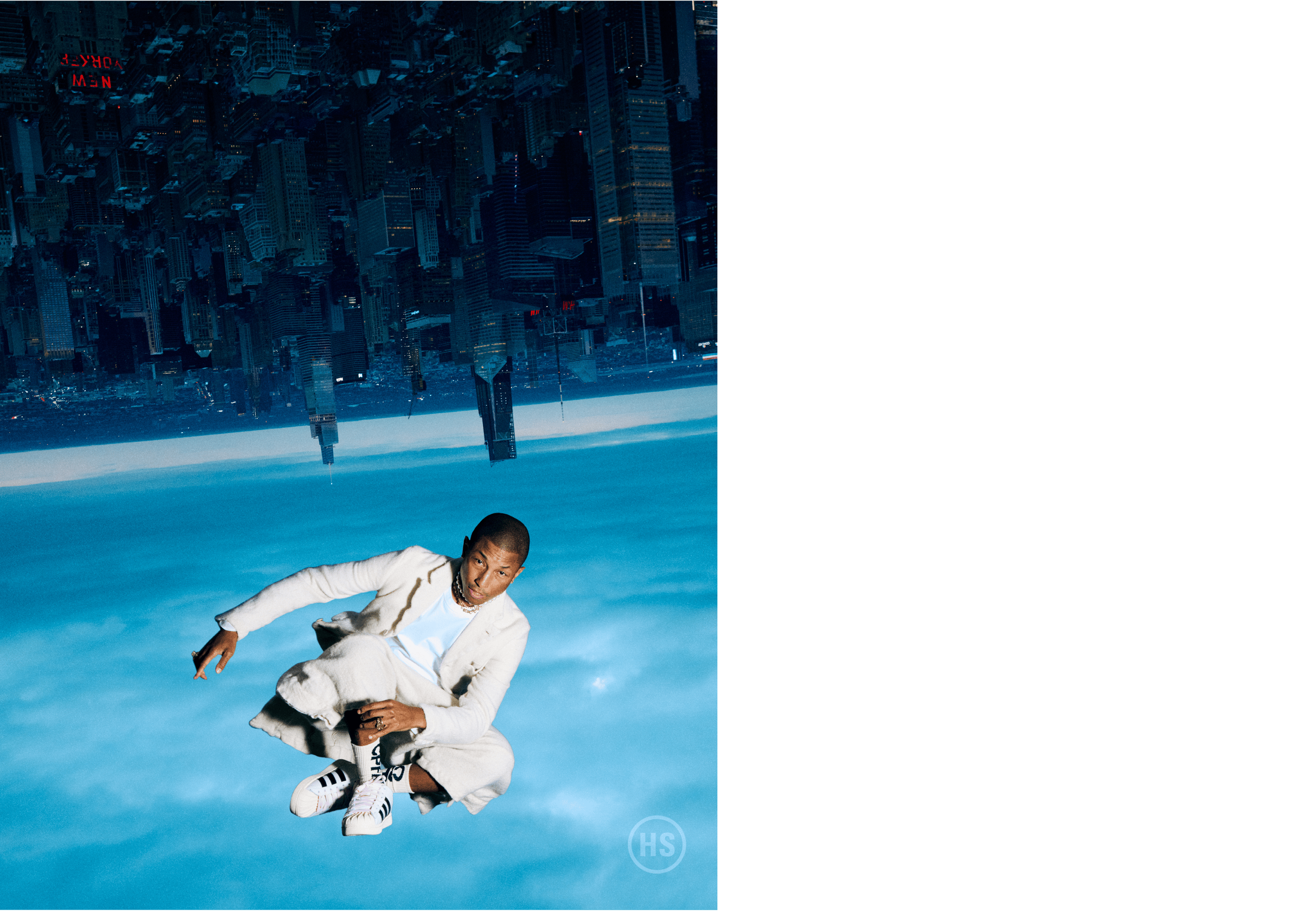
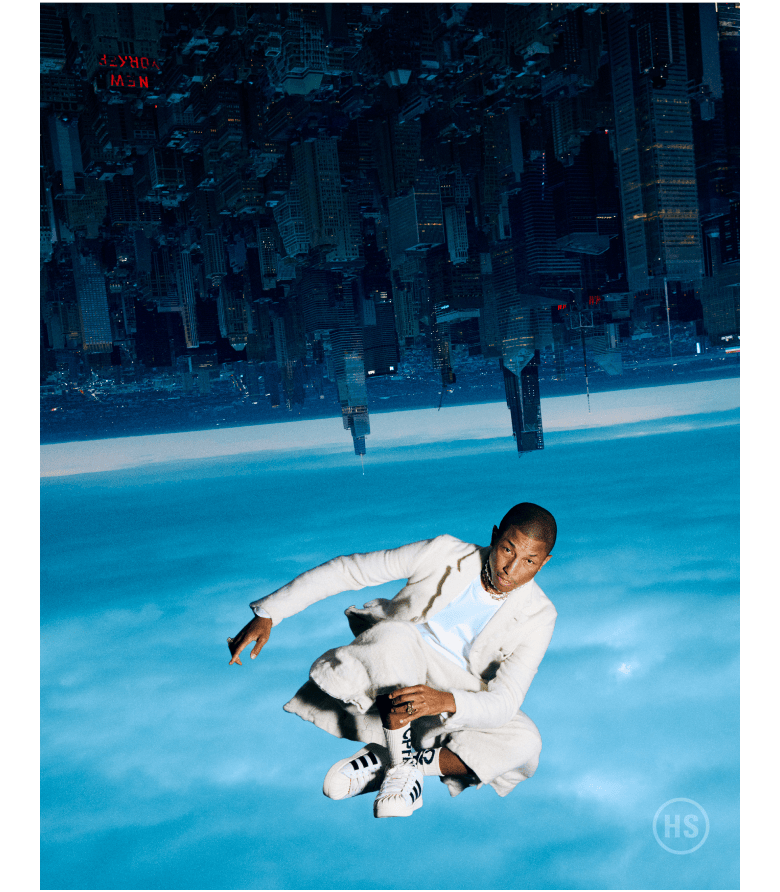
This curiosity has led him toward one of the most confounding projects of his life: Piece by Piece, a biopic animated entirely in LEGO by Oscar-winning director Morgan Neville. Picture this: A rags to riches story, told through LEGO, animated into an amazing technicolor dreamscape, and interspersed with LEGOfied versions of Gwen Stefani, Kendrick Lamar, Timbaland, Justin Timberlake, Busta Rhymes, Jay-Z, and Snoop Dogg.
As stacked as the supporting cast is, Williams not so humbly notes that “you'd need another two hours to put in all the people that I've worked with and to put all the music in there.” To keep the film at a tight hour and a half, the artist put his full faith in Neville, a wise decision considering the director’s music biopic 20 Feet from Stardom won an Academy Award in 2014. “He's a masterful storyteller,” Williams says. “I needed to put my story in the hands of someone I trusted. He was that guy. I gave him complete autonomy to tell my story.” That’s not to say Williams was entirely hands-off. While Neville crafted the narrative, Williams got to work on what he does best: producing a product.
“After LEGO agreed, one of the first things I talked to them about was meeting their consumers at the intersection of what they look like. There are a lot of different types of hands that put LEGO pieces together, and they're in all different colors. There are so many considerations when you think about diversity,” he says of the process, which resulted in 30 new minifigure heads in a range of skin tones and hair types (including Pusha T’s braids). “So many people have weaponized the word ‘diversity,’ as if that's a bad word. I think it's a beautiful word because it describes our species. We are a diverse species, and I love that LEGO didn't look at it in any other way beyond just humanity.”


The story, as it turns out, makes for a pretty great animated biopic. Pharrell was born in 1973 in Virginia Beach, Virginia, and spent his first seven years in the Atlantis Apartments, a sprawling, low-income housing community where creativity and crime was at an all-time high. A move to the suburbs sheltered him and provided safety to explore his fascination with music on his path toward superstardom. Pile on a stacked cast of collaborators, including fateful schoolyard connections with Pusha T, Missy Elliot, and Timbaland, and sprinkle in his lifelong synesthesia (a condition that allows him to see colors when hearing sounds), and you have a recipe for a visually kaleidoscopic adventure with a great soundtrack. Of course, seeing LEGOfied versions of his famous friends and collaborators also helps.
Piece by Piece has been hailed as vibrant, propulsive, and inventive in early reviews; not bad for a film that Williams was adamantly against making for years. “I never wanted to [tell my story].” It was after a humbling realization that he decided he needed to tell it. “You realize that it's so much bigger than you. It's really about the totality of you, your situation, the people in your life. [It isn’t] about my ego or my hubris or me being arrogant. It's about me realizing it's so much bigger than all that.” The key was to open himself up. “When I was a kid, I knew I was different, and people would say, ‘Oh, that's an odd child.’ And that crushed my spirit,” he says in the movie’s trailer. It may have taken a few decades, an astronomical career, and now, a LEGOfied film about his life, but Williams finally gets it. He no longer needs to maintain the walls he’d put up to protect that odd child. In fact, letting them down meant seeing the universality in his experience, and by recognizing the universal in his personal story, he was able to see the value in telling it.
“The story, at the end of the day, is whether you're eight or 80 years old, it's never too late. It's never too late to think about something that makes you happy on the inside, really excites you, really makes you feel alive. I always thought everyone was standing in my way, trying to stop me from trying different things, and really, when I was humbled, I realized that everybody's just been in full support. And, man, I don't want anybody to take this long. I don't want you to turn 51 to figure that out. You could figure this out right now as a six-year-old. It's never too late to start building your dream, piece by piece.”
To dig into the life behind the man, Williams sat down with best-selling author and award-winning journalist Michael Harriot. They covered a lot of ground. Here’s how it went:



Pharrell Williams: It sounds like an all-encompassing state of self-awareness. Environmental awareness. Like you're illuminated. You're not in the dark about all the right touch points that matter to the culture. That's what it sounds like. I could be wrong. I've been appointed to do, and just taking that with me every step, that appreciation.
I can't pinpoint how it's influenced me. I can just tell you that it takes you over. It's undeniable. Coming from where I came from, Virginia Beach, Virginia, never, ever, ever dreaming that I would be where I am now, or that I would get to do what I love to do: music every day.
That took me somewhere. I spent the first 10 years of my career going, “Oh, shit. This is real. Okay, I'm actually going to continue doing this. This is crazy.” Then I went through my “why me” phase because it was good. And then I started to realize, as you go back and forth between wherever you are and wherever your career takes you, and when you see where you come from, how tough it was for your parents, how they may or may not have had it all the way mapped out and figured out, and think about why it was tough for them, you can see it so clearly. There's enough distance between where you are, not only in life but physically and geographically, you go, “Oh, if they would have done this and done that, that would have turned out different. And if somebody would have told them …” But why don't they tell them? And then you start thinking about the institution of keeping Black folks from their, not only their history, but their origin and their identities, then it becomes undeniable. For example, if my parents were more concerned with me having amazing tutors than a Cadillac, where would I be? But they didn't have nobody. And my mom went on to get her PhD.

But while she was in pursuit of her master’s, it never occurred to her [to think], “Hey, maybe we won't need this Cadillac. Maybe we should just get him a tutor, figure out what he doing, and da-da-da-da.”
Who was going to tell them? Being outside of America these past two years has really, really, really made me look at it. It's not like I ain't have Black Ambition, our [non-profit], before we came to Paris, or the same with YELLOW, our other [non-profit]. It's not like I didn't have them, but you really see it in a more pronounced way when you're across the pond, looking back at home and seeing how caught up you can be when you don't know you in it. A fish doesn't know it's wet. So I guess when you're asking me the impression that it's made on me, it's been a long time coming. It's hard to see. It's hard to see when you're in it every day, if that makes any sense.
You said it so succinctly, yep. That helped us be versatile, because it only worked in Virginia if it was banging, if it was hitting. When you’re hearing Public Enemy Records, and you're hearing Beastie Boys records and Eric B. & Rakim, and you just got through listening to UTFO and Run-D.M.C., you're like, “What am I listening to? This is the banging-est.”
Music at that time for us could make us laugh and high-five each other and be so fucking hyped, you know what I mean? I'm not saying that you can't get that feeling now, I'm not telling you that you can't catch it on certain songs that's out here. I'm talking about that there's a spirit. And when we were coming up in Virginia, we were hearing music from all over the place. You get that today, but you don't get it all the time — the internet has homogenized the sound so much that when the algorithm is literally only playing what people are listening to, then people think they need to play what people are listening to, not necessarily innovating.
I grew up at a time where a record could not get played in the club or at a house party if it didn't fucking hold its own weight against something that sounded completely different –– complete different set of sounds, drum sounds, samples, voices. People don't understand, I really get the joy out of music. And that's because, to your point, in Virginia, we didn't have a sound. Only the best shit won. So it fucking trained me.
First of all, those are two big words: fashion and icon. And the two together are like, whoah. They're alchemical, especially in reference to me. Same thing — [Virginians] weren't known for fashion. So whatever came through there, if it was hot, then we was on it. For me, I just always looked up to the hustlers. They would wear a lot of Polo and have a lot of big chains on, and get in the big body Mercedes Benzes. We were enamored by that. When I was young, we didn't really hang with the drug dealers. We were more part of the skate world. Native Tongues, De La Soul, Tribe Called Quest, Jungle Brothers, Leaders. It was black hippie beatnik-type vibes meets skater. That was my world.
But I still had a reference for the drug dealers in Norfolk that would play the newest, latest rap shit with the gold chains and the big truck jewelry. All of that influenced the shit out of me. And then when I got older, I made the transition of hanging out with the hustlers and their taste, everything from them wearing exclusive Polo that you could only really find in New York City to wearing Gucci, Creed and Cool Water, the colognes. I just noticed everything. And these guys were our idols. They would walk around like Olympians. The Greek gods.

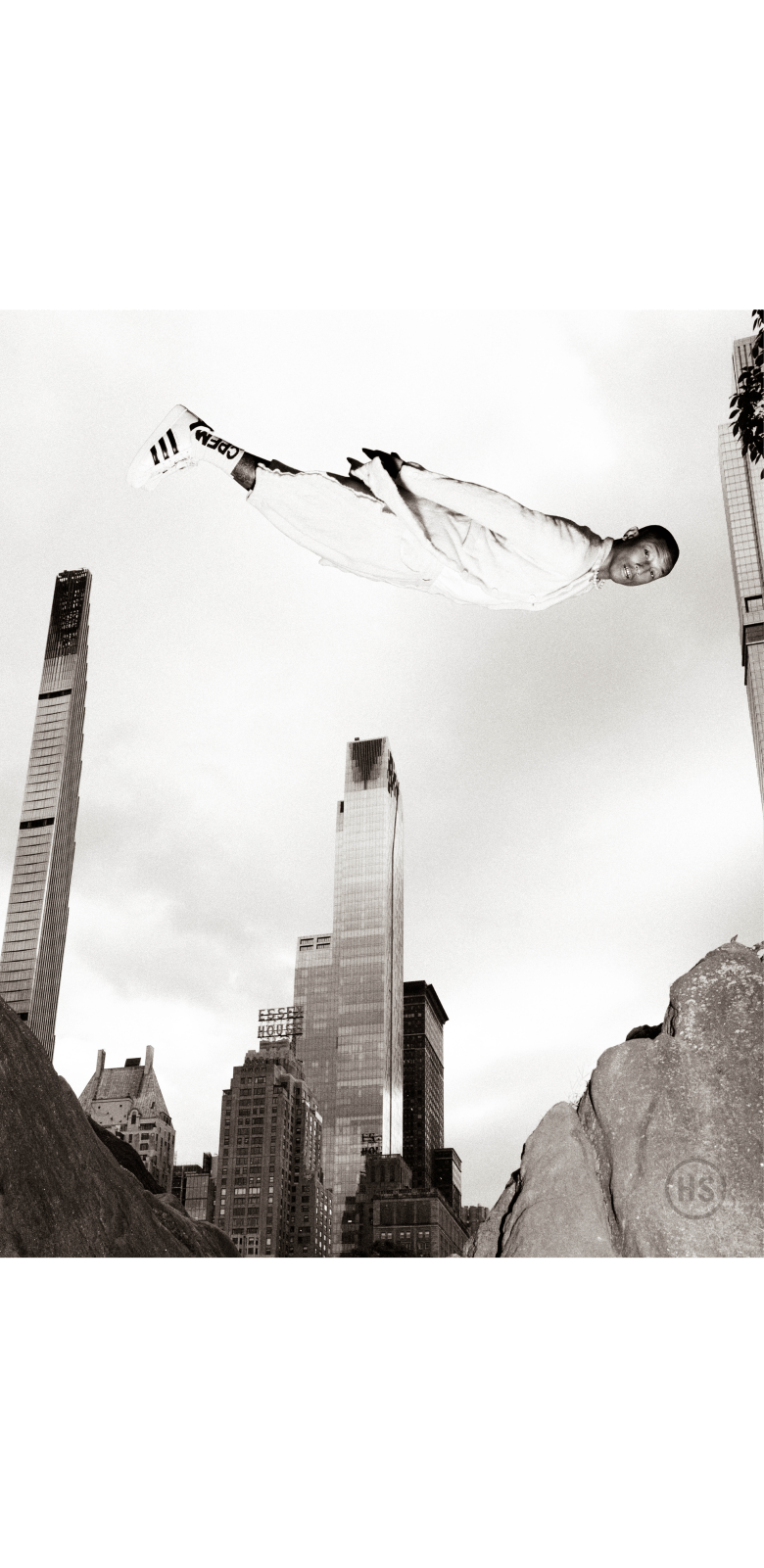
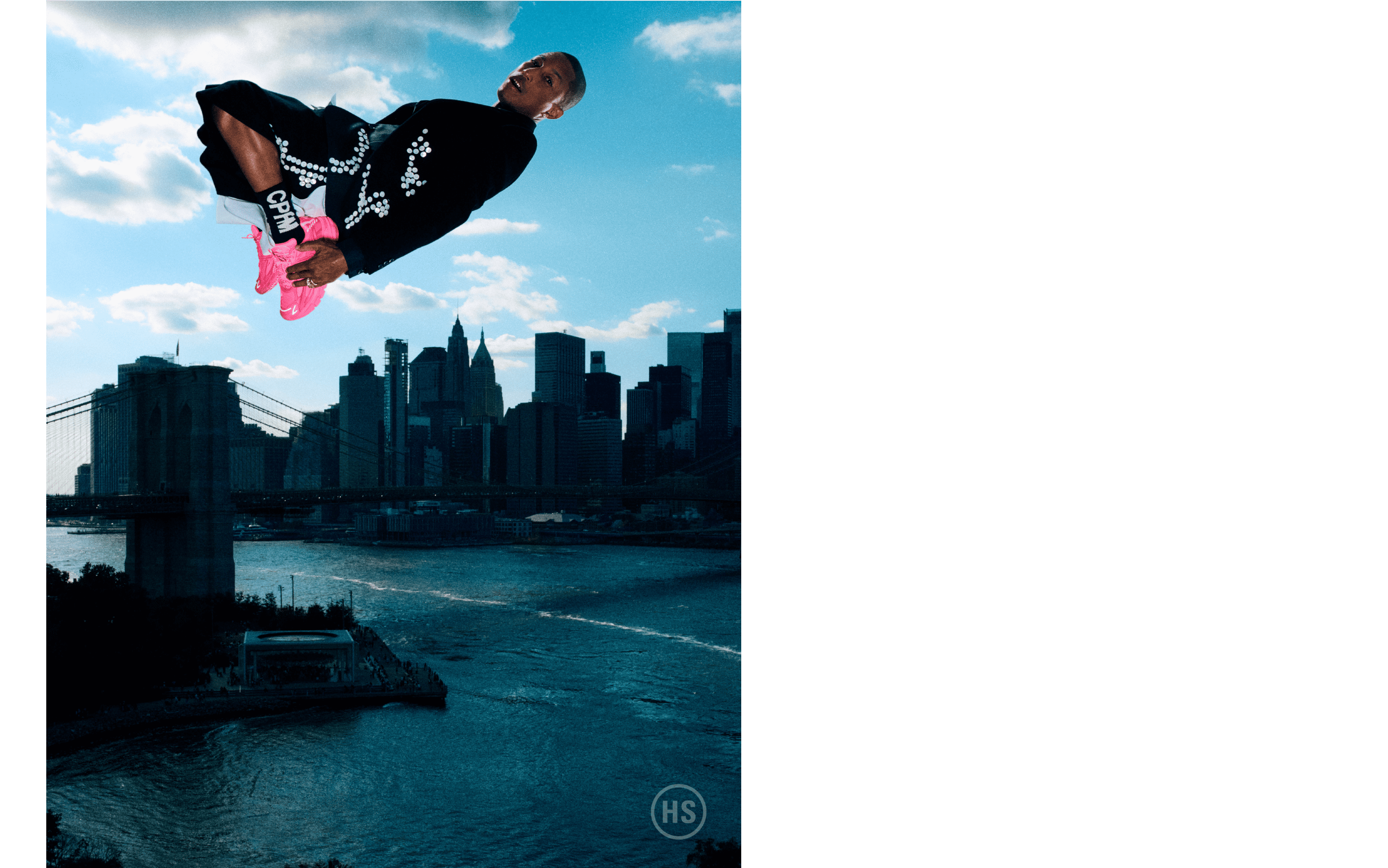

Man, that's almost like asking me what's my best song. And I got to say I am so much more intrigued about what I don't know than what I know. It's probably something that I haven't worn yet. I am so much more intrigued by the backside of a question mark than I am what I already know.
No, not with fashion. When I hear music, it's hard to put into words, because I'm not really seeing shapes as much as I'm just seeing what's in the shapes. So it's an occupation of a space, but it appears and presents itself as colors. It's more like it ain't the dot, it's what's inside the dot. Like, it doesn't have any walls or anything because it's not the shape, it's what's in the shape, and it's the color, if that makes any sense.
They have to trigger something in me at that moment. There needs to be something irreverent about them and subversive. But I learned to stop saying “That's it,” because it might be it for me for about six or eight months. I learned to just shut up and follow the instincts. The instinct is what naturally pulls you and compels you, but your mind is what wants to speak in absolutes. And I hesitate to do that, because every time I've ever done it I've been wrong.

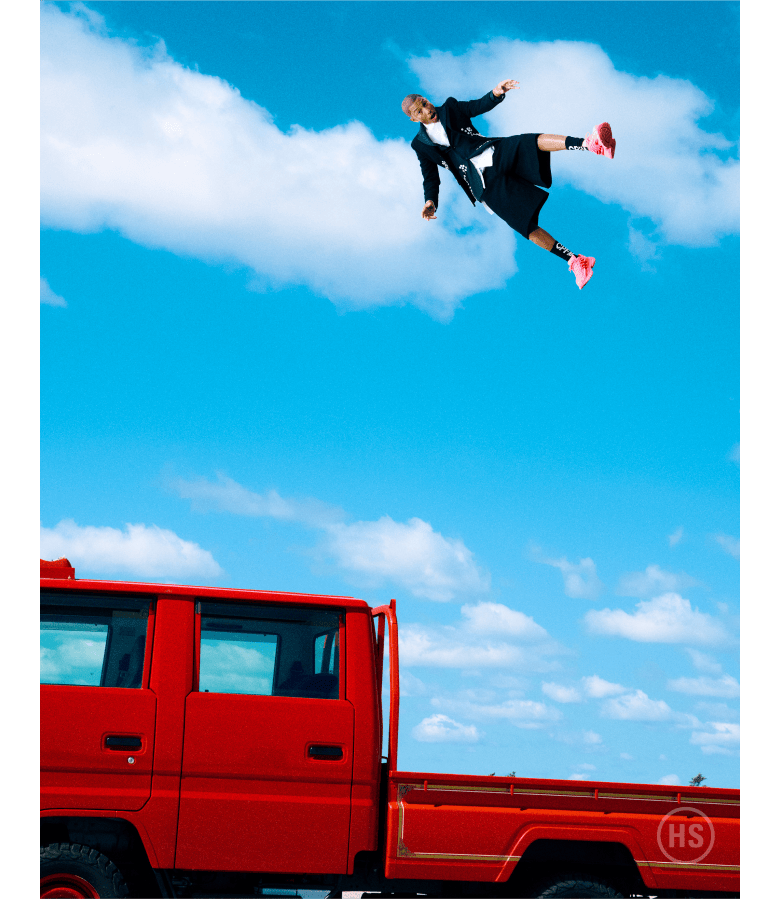
It's not a consideration when I'm creating, but it is definitely so rewarding when it happens. When I aim too hard for something, I'm trying too hard. If I just aim for quality, then it always works out. If you take people on a journey with you, as long as it's just as curious as it is delivering in the details, it's very interesting who comes along with you for the ride. I never want to please everyone. I want to go narrow and go deep.
Man, marginalized community: Throughout this whole LEGO press campaign, I probably used those two words as much as the word “the.” I'm from the mud, I'm from public housing. We lived on a federal subsidy. I understand what government cheese tastes like. I know what food stamps look like. I know what having food stamps and depending on them [is like], I know what that vibe is. That's something I'll never forget. And I hate to associate it with being Black, but that happens to be a side effect of being a descendant in America, like, they coerced and misled a huge swath of the population. And it's interesting, the trap is called the trap, but man, it's almost like we all live in the trap. Most of those neighborhoods are one way in, one way out. What is that? What is that about?
It's three reasons. First reason is like you said, [I’m] from Virginia, why would that be interesting? It's not like New York. I didn't want to do a film on my life. I didn't get it. I didn't understand why. Second of all, I am a very curious person and my best work always comes from when I'm super curious and/or when I'm collaborating with a master in the space, which is the reason why I ended up with Morgan [Neville], but I didn't want to do a documentary. It is like looking in the mirror. You know what you did two weeks ago? Where you come from? What's appealing about that? And then lastly, on a tertiary level, I don't want to listen to my voice. It's like voicemail. You don't want to listen to your voice on a voicemail. It's the worst. Then imagine doing that for an hour. Who wants to do that? So I was like, no way.
My agent was so persistent. He finally said, “You can do it whatever way you want, man. Just come on.” And I was like, “Hmm.” And at that point it was like, oh, okay, well maybe this could be less of a reflective process and more an opportunity to be creative. So going back to point number two, that's when Morgan Neville came up. He always picks a really interesting angle. It was like, oh, if he tells my story, I'll give him autonomy. I let him use the music in whatever way he wants to? Cool, whatever.
But then it was, I still need some degrees of separation from me. And that's when it was like, oh, well man, when I was a kid, my earliest memories of toys was LEGO sets from my parents. And with our four kids now, all we've ever gotten them consistently is LEGO sets. I wanted my kids to be able to understand the minute that the film was done they could watch it and really totally get it. So it was a means of not only objectifying myself so that I could get inspired and actually be able to do music and what have you, but also, to make it so that all my kids could understand when dad was telling his story.
Credits
Interview by: Michael Harriot
Text by: Chris Erik Thomas
Photographed by: Julian Song
Executive Producer: Tristan Rodriguez
Styled by: Matthew Henson
Set by: Brian Lee
Barber: Johnny Cake
Production Manager: Mehow Podstawski
Production Coordinators: Diarmuid Ryan, Zane Holley
Production: t • creative